
Radiation Therapy for Dogs and Cats: What Pet Owners Should Expect
Learn how radiation therapy treats cancer in dogs and cats, including treatment types, side effects, and what to expect.
A cancer diagnosis for your dog or cat can be overwhelming. Knowing what treatment involves can make decisions about your pet’s care feel a little easier to approach. Radiation therapy is one of the most common treatments used in veterinary oncology to destroy cancer cells, shrink tumors, relieve pain, and improve quality of life. Depending on your pet’s diagnosis, radiation therapy may be recommended on its own or alongside surgery, chemotherapy, immunotherapy, or other treatments.
Understanding how radiation therapy works and what to expect can help you feel more prepared throughout your pet’s treatment.
What Is Radiation Therapy?
Radiation therapy directs focused energy at a tumor to interfere with cancer cells’ ability to grow and divide. This damages cancer cells so they die over time. Computer-based planning allows us to spare the normal, health tissues near tumors so they do not become damaged, and treatments are spaced out to allow nearby healthy tissue time to recover between sessions.
Radiation is considered a local treatment, meaning it is aimed at the part of the body where the tumor is located rather than treating the whole body. This makes it an effective option for tumors that cannot be completely removed with surgery, tumors that are difficult to reach surgically, or cancers where preserving nearby healthy tissue is especially important.
"Radiation therapy is designed to target cancer cells while protecting nearby healthy tissues, helping many pets maintain comfort and quality of life during treatment."
– Erin Trageser, DVM, MS, DACVR (Radiation Oncology)
When Is Radiation Therapy Recommended?
Radiation therapy is used to treat many types of cancer in dogs and cats. It may be used to shrink a tumor before surgery, treat cancer cells that remain after surgery, or relieve pain when a cure is not possible. In some cases, radiation therapy is used alone. In others, it is combined with surgery, chemotherapy, or other treatments to improve outcomes.
Your veterinarian or veterinary radiation oncologist will base the treatment plan on your pet’s diagnosis, tumor type and location, and overall health.
Radiation therapy may be recommended if your pet has:
- A tumor that cannot be completely or safely removed with surgery
- Cancer cells remaining after surgery
- A tumor in a sensitive location where surgery could affect important nearby structures
- A cancer that causes pain or discomfort
- A type of cancer that is known to respond well to radiation treatment
Radiation therapy is commonly used to treat brain, nasal, oral, skin, and soft tissue tumors, as well as certain bone cancers and other cancers affecting dogs and cats.
Types of Radiation Therapy
The type of radiation therapy your pet receives depends on the type of cancer, its location, treatment goals, and your pet’s overall health. Your veterinary radiation oncologist will recommend an approach based on your pet’s individual diagnosis and needs.
Definitive Radiation Therapy
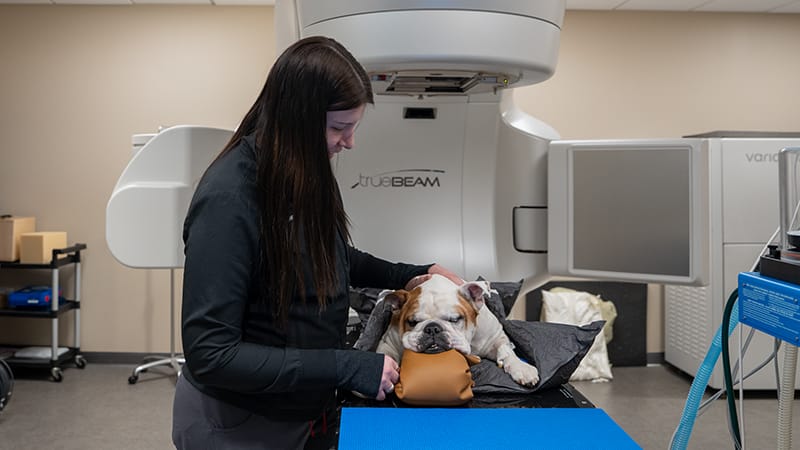
Definitive radiation therapy is designed to provide the best opportunity for long-term tumor control. Treatments are typically given five days a week over several weeks, with most pets receiving 16 to 20 treatments.
Each individual treatment lasts only a few minutes, but pets receive brief anesthesia so they remain completely still while the radiation is delivered precisely. This helps protect nearby healthy tissues while accurately targeting the tumor.
Although this approach involves more visits, it generally provides the greatest chance of controlling the cancer over time.
Stereotactic Radiation Therapy
Stereotactic radiation therapy (SRT) is an advanced form of radiation therapy that delivers high doses of radiation directly to a tumor with a high degree of precision. By closely targeting the tumor, SRT can limit radiation exposure to surrounding healthy tissues.
SRT is typically delivered in fewer sessions than conventional definitive radiation therapy. It may be an option for certain tumors, including some brain, spinal, nasal, lung, liver, and bone tumors, depending on their size, location, and other factors.
Not every tumor can be treated with SRT. Your veterinary radiation oncologist will determine whether it is an appropriate option based on your pet’s diagnosis and treatment goals.
Palliative Radiation Therapy
Not every cancer can be cured, but treatment can still improve your pet’s comfort and quality of life.
Palliative radiation therapy focuses on improving comfort rather than eliminating the cancer. This approach usually involves fewer treatments, often three to six treatments delivered on consecutive days or once a week, with the goal of reducing pain, shrinking the tumor, or improving your pet’s quality of life.
Because fewer treatments are required, side effects are generally milder than with definitive radiation therapy.
Does Radiation Therapy Hurt?
One of the most common concerns pet owners have is whether radiation therapy is painful.
The treatment itself is not painful. Your pet will receive brief anesthesia before each session so they remain comfortable and completely still during treatment. Most pets recover quickly from anesthesia and can return home the same day.
Some pets develop temporary side effects as treatment progresses, particularly when the skin or mouth is included in the treatment area. Your veterinary team will discuss what to expect based on your pet’s specific treatment plan and provide recommendations to keep your pet as comfortable as possible.
Possible Side Effects of Radiation Therapy
Because radiation is targeted to a particular area, the side effects a pet may experience depend largely on the area being treated.
Short-term side effects typically develop gradually during treatment and may continue for several weeks afterward. Depending on the treatment site, these may include skin redness, irritation, temporary hair loss, inflammation of the mouth, or discomfort while eating.
Long-term side effects are less common, but they can occur months to years after treatment. These vary based on the treatment location and may include changes in the skin, scarring, dry eye, cataracts, or effects on nearby bone or soft tissues. Radiation-induced tumors are exceedingly rare in veterinary medicine.
Your radiation oncology team plans treatment carefully to target the tumor while protecting nearby healthy tissue as much as possible.
Preparing Your Pet for Radiation Therapy
Before beginning treatment, your veterinary team will provide detailed instructions to help prepare your pet.
Because anesthesia is required, most pets should not eat for approximately six hours before each treatment. Water is typically allowed until the morning of the procedure unless your veterinary team instructs otherwise.
Your veterinarian will also review any medications your pet should continue taking and explain what to expect on treatment days. Most appointments are outpatient procedures, so pets are usually able to return home later the same day.
What to Expect After Treatment
Many pets are a little sleepy after anesthesia but return to their normal routines within a day. As treatment continues, your veterinary team will monitor your pet closely for any side effects and adjust supportive care as needed.
Be sure to contact your veterinarian if you notice worsening skin irritation, difficulty eating, changes in your pet’s comfort level, or any concerns during treatment. Keeping your veterinary team updated helps them adjust care quickly if your pet needs additional support.
Is Radiation Therapy Right for My Pet?
Every cancer diagnosis is different, and there is no single treatment that is right for every pet. Radiation therapy may be recommended to treat the cancer, slow its progression, relieve pain, or improve your pet’s quality of life.
A consultation with a veterinary radiation oncologist allows you to discuss your pet’s diagnosis, treatment options, expected outcomes, and any questions you may have. The oncology team will also coordinate with your family veterinarian so your pet’s care stays connected before, during, and after treatment.
If your pet has been diagnosed with cancer or your veterinarian has recommended radiation therapy, MedVet’s board-certified medical oncologists and radiation oncologists can help you understand your options and coordinate your pet’s care from consultation through follow-up.
Learn more ways to keep your pets healthy and safe.
About MedVet
MedVet is a nationwide network of emergency and specialty hospitals founded, owned, and led by veterinarians. Our teams provide 24/7 emergency care alongside a wide range of specialty services, with board-certified specialists collaborating across disciplines to deliver advanced, compassionate care for pets and the people who love them.
Find a MedVet location near you.
FAQs
Is radiation therapy painful for dogs and cats?
No. Radiation therapy itself is not painful. Pets receive brief anesthesia during treatment so they remain still and comfortable while radiation is delivered. Some pets may experience temporary side effects depending on the treatment area.
How many radiation treatments will my pet need?
The number of treatments depends on your pet’s diagnosis, treatment goals, and type of radiation therapy. Some pets may receive multiple treatments over several weeks, while others may need only a few sessions for comfort and pain relief.
What are the side effects of radiation therapy in pets?
Side effects vary depending on the location being treated but may include skin irritation, hair loss, inflammation, or discomfort in the treated area. Your veterinary oncology team will monitor your pet and provide recommendations to manage side effects.
Share




Contents