Stereotactic Radiation Therapy (SRT) for Dogs and Cats: A Precise Cancer Treatment
SRT delivers precise, high-dose radiation to certain tumors in dogs and cats while limiting exposure to nearby healthy tissue.
Stereotactic Radiation Therapy (SRT) is an advanced cancer treatment that uses carefully targeted, high-doses of radiation to treat certain tumors in dogs and cats. By targeting the tumor and limiting radiation exposure to nearby healthy tissue, SRT may be an effective option for some pets with cancer.
Unlike conventional radiation therapy, which often requires many treatments over several weeks, SRT is delivered in a small number of sessions. Whether SRT is appropriate for your dog or cat depends on several factors, including the type, size, and location of the tumor.
What Is Stereotactic Radiation Therapy?
SRT uses advanced imaging, treatment-planning software, and precisely targeted radiation delivery to treat a tumor while minimizing radiation to surrounding tissues.
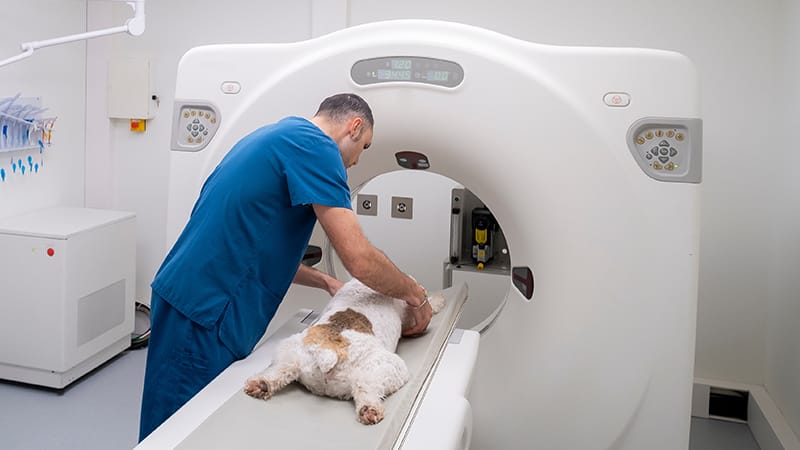
Before treatment, a CT scan is used to determine the exact location and size of the tumor. The radiation oncologist uses this information to map the tumor and nearby organs and tissues to create an individualized treatment plan.
SRT typically involves one to five sessions, depending on the tumor and treatment plan. Because each session delivers a higher radiation dose than conventional radiation therapy, careful planning and precise patient positioning are essential.
SRT may also be referred to as stereotactic radiosurgery or stereotactic body radiation therapy, depending on the treatment approach. Despite the term “radiosurgery,” SRT does not involve an incision or surgical removal of the tumor.
Is SRT an Option for My Pet?
SRT may be an option for dogs and cats with certain localized tumors that can be safely treated with focused radiation.
The type and location of the tumor are important considerations. Some tumors that may be treated with SRT include:
- Certain brain and pituitary tumors
- Nasal or sinus tumors
- Certain oral tumors, including melanoma, squamous cell carcinoma, fibrosarcoma, and osteosarcoma
- Certain bone tumors
- Some prostate tumors
- Some lung tumors
This list is not exhaustive, and SRT may also be considered for other tumors. SRT is not appropriate for every tumor, and the best treatment approach depends on your pet’s individual diagnosis.
Your veterinary oncology team will consider factors such as the tumor’s size and location, whether it has spread, nearby radiation-sensitive tissues, your pet’s overall health, and the goals of care. Advanced imaging, including CT, helps the radiation oncology team determine whether the tumor can be treated safely and effectively with SRT.
How Does SRT Work?
SRT requires detailed planning before treatment begins. A CT scan helps the radiation oncology team map the tumor and identify nearby health tissues that need to be protected. This information is used to create a treatment plan for how radiation will be aimed and delivered during each session.
During treatment, radiation is aimed at the tumor from several carefully planned directions. This helps focus the strongest dose where it is needed most while reducing the amount of radiation that reaches surrounding tissues.
Because SRT depends on accurate positioning, pets need to remain completely still for each session. General anesthesia helps keep your dog or cat comfortable, safe, and in the correct position while treatment is performed.
What Can I Expect During SRT Treatment?
The number of sessions varies depending on your pet’s tumor and treatment plan. Sessions may be performed on consecutive days or with time between appointments.
Your pet will receive general anesthesia for each treatment. Before anesthesia, your veterinary team will provide specific instructions about fasting, medications, and other preparations.
Once your pet is anesthetized, the radiation oncology team will carefully position them and use imaging to confirm the treatment area. The radiation treatment itself is brief, but your pet will remain under veterinary supervision before, during, and after the procedure.
After treatment, your pet will be monitored as they recover from anesthesia. Many pets are able to go home the same day once they are awake and recovering appropriately.
Your veterinary team will provide instructions about feeding, medications, activity, and follow-up care.
What Are the Side Effects of SRT?
One of the advantages of SRT is its ability to concentrate radiation on a specific treatment area while limiting exposure to nearby healthy tissue. However, side effects are still possible.
The risk and type of side effects depend largely on where the tumor is located, the dose of radiation delivered, and which normal tissues are near the treatment area.
Some pets may experience temporary changes in the area being treated. Depending on the location, these may include skin irritation, hair loss, inflammation, or other tissue changes. Some effects may develop weeks or months after treatment.
Because SRT uses high doses of radiation, protecting nearby sensitive structures is an important part of planning. Your radiation oncologist will discuss the potential short- and long-term side effects specific to your pet’s tumor and treatment plan, including which signs to watch for at home and when to contact the veterinary team.
How Is SRT Different from Conventional Radiation Therapy?
Both SRT and conventional radiation therapy use radiation to treat cancer cells, but they differ in how the radiation is delivered.
Conventional radiation therapy generally uses a lower dose given across many sessions, with treatments often scheduled five days a week for several weeks. SRT delivers higher doses in a much smaller number of sessions. Generally, a tumor must be at least once centimeter in size for it to quality for SRT.
Neither approach is right for every pet. The best radiation treatment approach depends on the tumor, its location, your pet’s overall health, and the goals of treatment.
SRT at MedVet
MedVet’s Radiation Oncology teams use advanced radiation technology to create individualized treatment plans for pets with cancer, including SRT. If your pet has been diagnosed with cancer or your veterinarian has recommended radiation therapy, MedVet’s board-certified medical oncologists and radiation oncologists can help you understand your pet’s options and coordinate care.
If you have questions about whether SRT may be appropriate for your pet, talk with your veterinarian or request a consultation with a MedVet radiation oncologist.
Learn more ways to keep your pets healthy and safe.
About MedVet
MedVet is a nationwide network of emergency and specialty hospitals founded, owned, and led by veterinarians. Our teams provide 24/7 emergency care alongside a wide range of specialty services, with board-certified specialists collaborating across disciplines to deliver advanced, compassionate care for pets and the people who love them.
Find a MedVet location near you.
FAQs
Is SRT safe for dogs and cats?
SRT is designed to precisely target a tumor while limiting radiation exposure to nearby healthy tissue. However, side effects are possible, and the risks depend on the tumor's location, radiation dose, and surrounding tissues.
How many SRT treatments does a pet need?
SRT typically involved one to five treatment sessions. The number of sessions depends on your pet's tumor and individualized treatment plan.
How long does SRT treatment take for dogs and cats?
The radiation treatment itself is brief, but your pet will need time for anesthesia, positioning, imaging, treatment, and recovery. Many pets can go home the same day after recovering from anesthesia.
Share




Contents